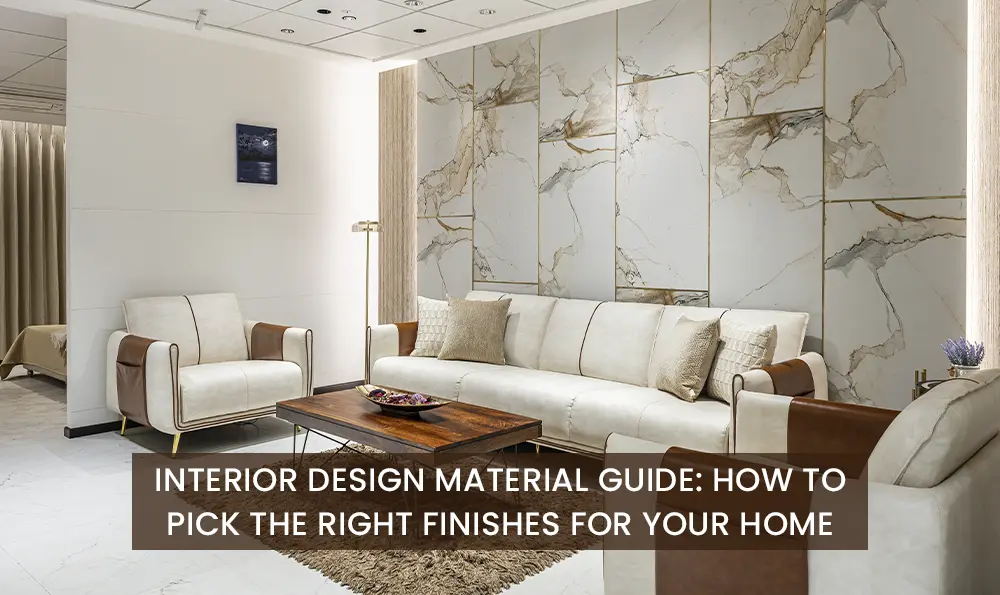
You spent months planning your home. The layout is right, the lighting is sorted, and the colour palette feels perfect. But six months in, the floor is scratching, the kitchen surface is staining, and the bathroom wall is showing moisture damage. Sound familiar? This is what happens when modern home ideas are based on looks alone. The finishes you select will determine how your home performs, feels, and ages over time. Poor interior design material selection is one of the most common and most costly mistakes homeowners make. This article breaks down what to consider, what to avoid, and how to get it right from the start.
Most people think about materials in terms of appearance. In reality, the impact goes much further than that.
The materials you choose define the look, feel, and longevity of every space in your home. They influence comfort, whether a surface feels warm or cold underfoot, how sound travels through a room, and how practical a space is to use daily. A warm wooden floor feels entirely different from a cold stone one, even if both photograph equally well.
Poor material choices lead to faster wear, higher maintenance costs, and finishes that date quickly. Good ones improve durability, support sustainability, and add genuine value to your property over time. Materials also reflect personal style, whether that is minimal, layered, or functional.
The goal is always the same: balance aesthetic appeal with everyday practicality. Getting this balance wrong is expensive to correct after the fact. When it comes to executing high-end residential projects, working with Goldmine Project Consultants, a luxury interior designer in Mumbai, ensures that your home reflects both international standards and local sensibilities.
Rushing this stage is where most homeowners lose money. Work through these factors before committing to any finish.
Thinking room by room is the wrong approach. The smarter method is to think by purpose first, then aesthetics.
These surfaces take the most pressure daily. For flooring, vitrified anti-skid tiles, natural stone, engineered wood, and paver blocks are practical and lasting choices. Surfaces, laminates, quartz, solid surfaces, veneers, and MDF offer scratch resistance and easy cleaning. Durability leads every decision here.
Bedrooms and living areas need to feel warm, not clinical. Wooden finishes, soft laminates, and fabric panels bring tactile comfort and reduce noise. Vinyl flooring and engineered wood are strong choices underfoot in spaces designed for rest and ease.
Bathrooms and kitchens remain continuously exposed to moisture, vapor, and cleaning agents. Anti-skid floor tiles, ceramics, water-resistant lamination panels, glass, gravel stones, moisture-proof panels, and glass sheets shall all perform well under these conditions. The safety of the occupants and the durability of the materials should drive every design consideration.
When a space needs to make a statement, luxury interior materials earn their place. Marbles, stone cladding, textured surfaces, wallpaper, metal detailing, glass, and laminates in designer shades add luxury in moderation. The use of any material without restraint is sure to create an overpowering environment.
Not everything expensive is necessarily of high quality. MDF, laminate, modular surfacing, and vinyl can all provide genuine substitutes for wood and stone. Employing the right interior design strategy can make inexpensive products just as elegant as their expensive counterparts.
There is no doubt about where the modern trend for housing materials is headed. Homeowners are looking less to shiny, high-maintenance surfaces but rather to something more earthy and homely.
Sustainable materials such as bamboo, reclaimed wood, and eco-laminates have now become popular. Engineered materials like quartz and composite stone are gradually replacing other types of material due to their longevity and low maintenance requirements. Matt finishes, and textured surfaces are increasingly replacing glossy finishes in floor coverings, cabinetry, and wall coverings. The juxtaposition of various materials, such as wood and metal or glass and stone, will provide contrast without being too much. Designers continue to define the most enduring interiors today with minimalist palettes anchored by natural textures.
These are the mistakes that show up repeatedly across residential projects:
With the right knowledge and guidance at the right stage of the project, you can avoid all of these mistakes.
Materials are not the final step. They are the foundation. Everything your home looks, feels, and functions like daily comes back to the finishes chosen at the start. Get them right, and your home will reward you for years. Get them wrong, and you spend those same years managing the consequences. Goldmine Project Consultants treats material selection with the same precision as every other part of the design process. With over 34 years of expertise in residential, commercial, and hospitality interior spaces, we know what is effective, what is lasting, and what can truly add class to your interior. If you are ready to take those tough decisions that won’t leave you disappointed, contact us now!
Founder and Principal Designer of Goldmine Project Consultant, established the firm in 1989 with a vision to “Think Beyond and Out of the Box.” With 34+ years of experience, he leads innovative, well-planned projects across Residential, Corporate, Healthcare, and Hospitality sectors, redefining Interior and Architectural excellence.
Error: Contact form not found.