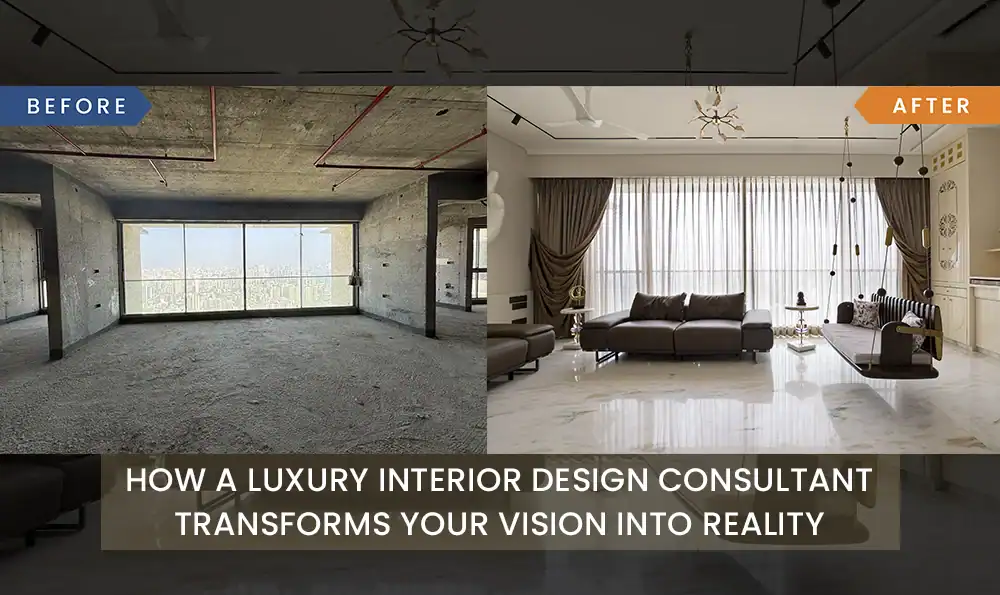
Most people begin a luxury project with a feeling rather than a plan. They are aware of the need for a place that will be serene, elegant, and distinctively their own, but the process of taking the emotion and turning it into drawings, materials, and an end result is entirely another story. This is where the luxury interior design consultant comes in handy. Through the application of design skills and knowledge of projects, the consultant brings all the ideas together and helps make decisions along the way. This blog explores how that process works, how it adapts to different spaces, and why it matters for both homes and commercial environments.
Ideas alone rarely make a finished interior. Most clients arrive with a handful of inspiration images, a few favourite colours, and a general sense of how they want to feel at home. A consultant turns these broad preferences into a clear design direction that every later decision can be measured against.
Experience matters just as much as taste. An experienced luxury interior designer balances aesthetics, functionality, space, and budget, so that no single priority is sacrificed for another. Expert planning also prevents the inconsistencies that appear when rooms are designed in isolation, and it helps avoid costly changes once execution is underway. Our guide to interior design pitfalls that cost homeowners time and money shows how common these problems are.
Most importantly, a consultant helps you create a personalized luxury interior instead of a copy of whatever is currently trending. Trends fade within a few seasons, while a build around your lifestyle and character continues to feel right for years. A consultant also acts as a single point of coordination between designers, vendors, and craftsmen, which keeps the vision intact from the first sketch to the final handover.
A good consultant follows a structured process that moves from understanding to execution. Each stage builds on the one before it, which keeps the project focused and the results consistent.
This all starts out with a discussion. The consultant will ask about your lifestyle, who uses which rooms, how you entertain, and your expectations of the completed project. Just as much as your personal style is part of the design brief, so are your habits and future aspirations, making sure the design works for reality rather than a picture.
Next, ideas become visible. Mood boards, colour palettes, texture samples, furniture styles, and visual references bring the direction together, so you can react to something tangible before work begins. Feedback at this stage is easy to act on, while changes made during execution are slow and expensive. Tools such as 3D visualisation go a step further by showing how the finished space will look and feel.
Layouts, zoning, circulation, storage, and furniture placement are resolved at this stage. A well-planned space decides where people will walk, where they will sit, and where belongings will live, so the interior feels effortless to use and never crowded. Good planning also allows for future needs, such as a growing family or a changing way of working, without forcing a redesign.
Flooring, wall finishes, fabrics, fixtures, hardware, and smaller details define the luxury aesthetic. A consultant guides these choices with attention to quality, durability, and how each material works alongside the others, from the feel of a fabric underhand to how a stone surface will age with daily use. Our interior design material guide explains how to pick finishes with confidence.
A luxury approach is never one size fits all. A bedroom asks for calm, a bathroom for precision, and an apartment for cohesion, so the consultant adjusts the design to the purpose and character of each space. These luxury interior design ideas show how that plays out in practice.
A bedroom works best as a quiet retreat. Calming palettes, layered lighting, rich textures, comfortable furniture, and personalised details such as custom headboards or curated artwork create a room that feels restful and refined. Soft, warm lighting at the bedside and a dimmable ambient layer help the room shift easily from morning routines to late-night relaxation. Our master bedroom design ideas explore this in more depth.
In an apartment, the challenge is cohesion. The living room, dining area, bedrooms, and passages should read as one connected story, with a consistent palette and material language running through them. Smart storage and thoughtful furniture placement make efficient use of space without compromising comfort.
Built-in wardrobes, concealed storage, and multi-purpose furniture are especially valuable in Mumbai apartments, where every square foot counts. The same thinking applies to luxury house decorating ideas for villas and bungalows, where scale changes but the principle of cohesion stays the same.
Bathrooms reward careful detailing. Premium stone and tile finishes, layered lighting, quality fixtures, and well-planned storage keep the space clean and sophisticated, while a calm layout makes daily routines feel easier.
A cohesive interior is rarely accidental. These luxury interior design tips help every room feel like part of one considered whole.
Colours, materials, textures, furniture, and lighting should speak to one another. A limited palette repeated in different forms ties separate rooms together without making them look identical. This is one of the simplest luxury interior design tips to apply, and one of the most effective.
A sculptural chandelier, a bold marble slab, or a handcrafted console draws the eye, but it needs calmer surroundings to shine. Restraint around the hero element is what gives a space its refined look. A single dramatic element per room usually works better than several competing for attention.
Well-placed lighting brings out architectural lines, textured walls, and decorative objects while setting the mood for each hour of the day. Understanding how natural and artificial lighting work together makes these decisions much easier.
True luxury is comfortable and practical as well as beautiful, and a room that looks stunning but frustrates daily use has missed the point. Seating should invite you to sit, storage should hide clutter, and every layout should support the way you actually live. The best luxury interior design ideas look effortless because the planning behind them is thorough.
The principles that shape a refined home also apply to commercial spaces, where design has to serve a brand and its users as well as an aesthetic.
A well-designed office projects professionalism the moment a client walks in. Comfortable seating, ergonomic layouts, balanced lighting, and quality finishes support focus and wellbeing, while colours, materials, and details quietly express brand identity. Quiet zones, meeting areas, and breakout spaces can all be planned so the office feels organised and welcoming rather than purely corporate. Luxury office interior design ideas should always serve the people who spend their working days there.
In a store, design directly influences sales. Good retail shop interior design ideas consider how customers move through the space, how products are seen, and how displays guide attention. Lighting plays a major role in showcasing merchandise, and the overall atmosphere should reinforce what the brand stands for. A clear layout also encourages customers to stay longer and explore more, which supports both the experience and the bottom line.
An experienced consultant adapts the approach to the purpose and users of each space, whether it is a quiet bedroom or a busy showroom. If you are planning a commercial project, our guide on how to choose an interior designer for commercial spaces is a useful place to start.
A luxury interior is the result of clear thinking, careful planning, and consistent execution, not chance. A skilled consultant brings these together, turning your ideas and preferences into a space that works beautifully and feels personal. Whether the project is a bedroom, an apartment, an office, or a retail store, the right guidance protects your vision at every stage and keeps the final result true to what you imagined at the start. If you are ready to begin, contact our team and take the first step toward an interior that truly reflects you.
Founder and Principal Designer of Goldmine Project Consultant, established the firm in 1989 with a vision to “Think Beyond and Out of the Box.” With 34+ years of experience, he leads innovative, well-planned projects across Residential, Corporate, Healthcare, Institutional, Retail, and Hospitality sectors, redefining Interior and Architectural excellence.
Error: Contact form not found.